.jpg)


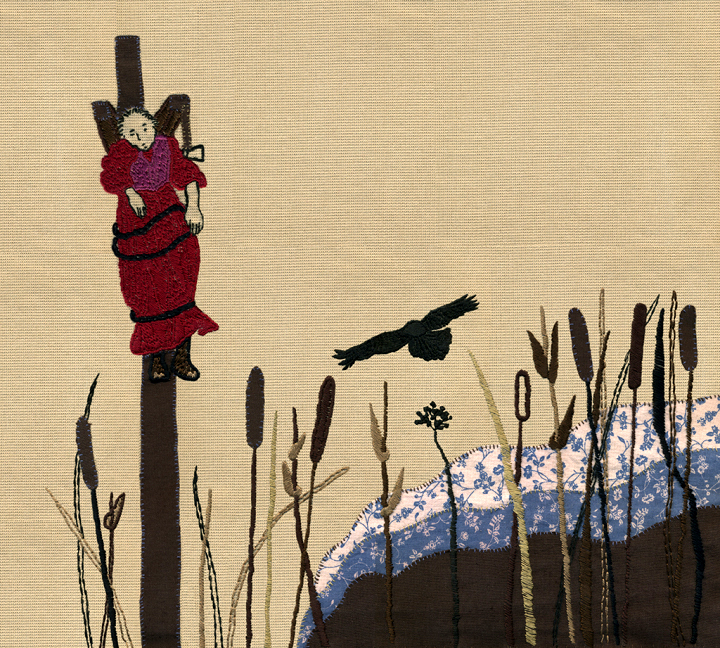
♦ Christiaens, Elsje ♦
(born in Jutland around 1646 – died in Amsterdam around May 1, 1664), servant, sentenced to death for murdering her landlady.
Around April 14, 1664, Elsje Christiaens, an 18-year-old from Sprouwen (possibly the island of Sprogo) in Jutland, arrived in Amsterdam. She hoped to find work as a maid and rented a room from a woman who provided lodging. At the end of that same month, the landlady wanted a daalder for lodging, which she could not pay. The landlady then threatened to confiscate her chest of belongings.
When they argued about this, the woman hit her with a broomstick. Elsje then grabbed an axe and struck the landlady, who fell down the cellar stairs and lay there, dead. Elsje Christaens then fled from the neighbors who had come to investigate the commotion and jumped into the Damrak canal. She was fished out and arrested.
She was interrogated twice, and on May 1, 1664, the sentence was handed down: death by strangulation on the stake, several blows to the head with the murder weapon by the executioner, and display of the body with the axe above her head in the Volewijk neighborhood to be consumed by the air and the birds. On that same day, May 1, or a few days later, the sentence was carried out.
♦ Volewijk
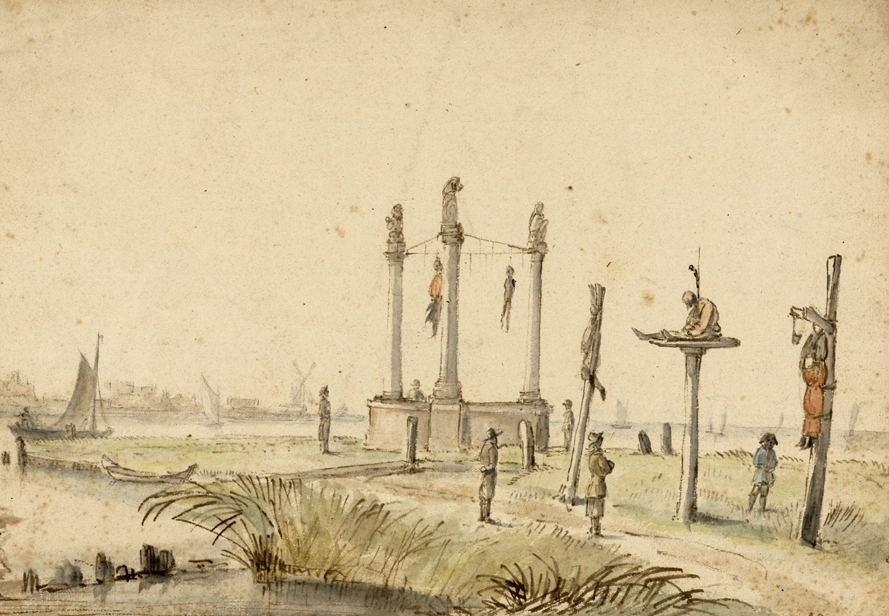
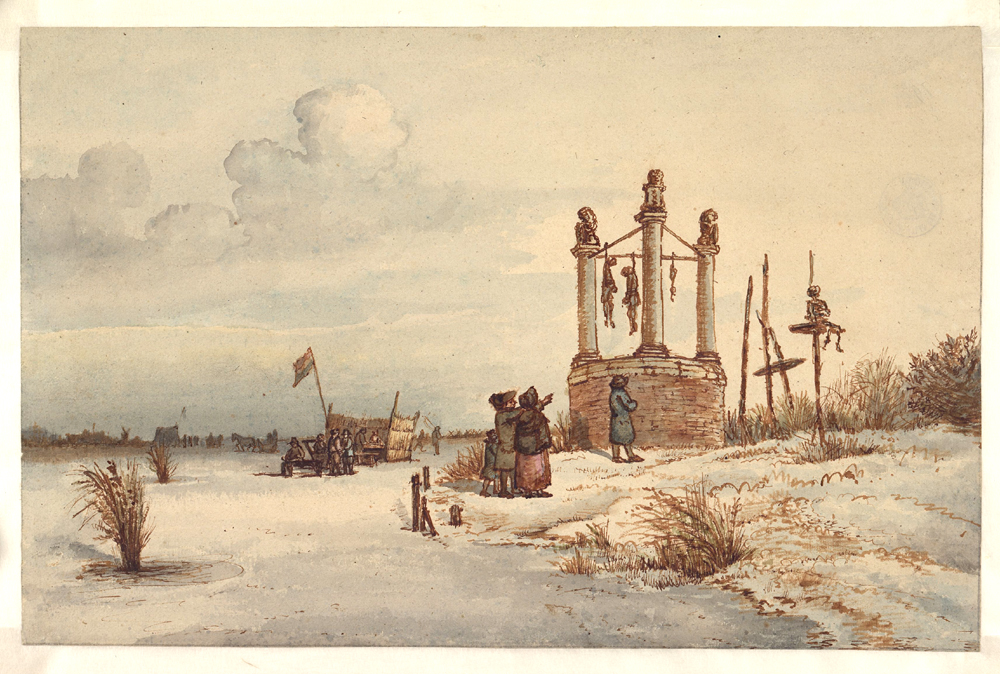
The history of the gallows field at Volewijk dates back to 1360, when this place was already used to display the bodies of executed criminals. The latter was an additional punishment on top of the execution.
Denying a decent burial meant that the executed person would not take part in the resurrection of the dead at the end of time, a biblical concept that no one doubted.
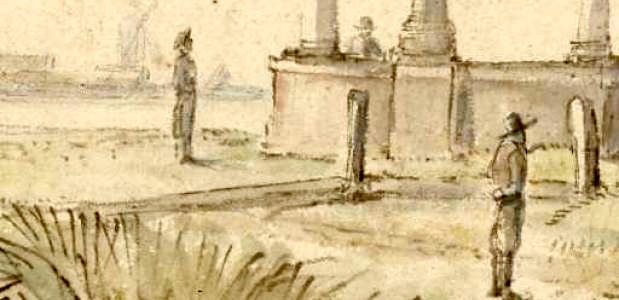
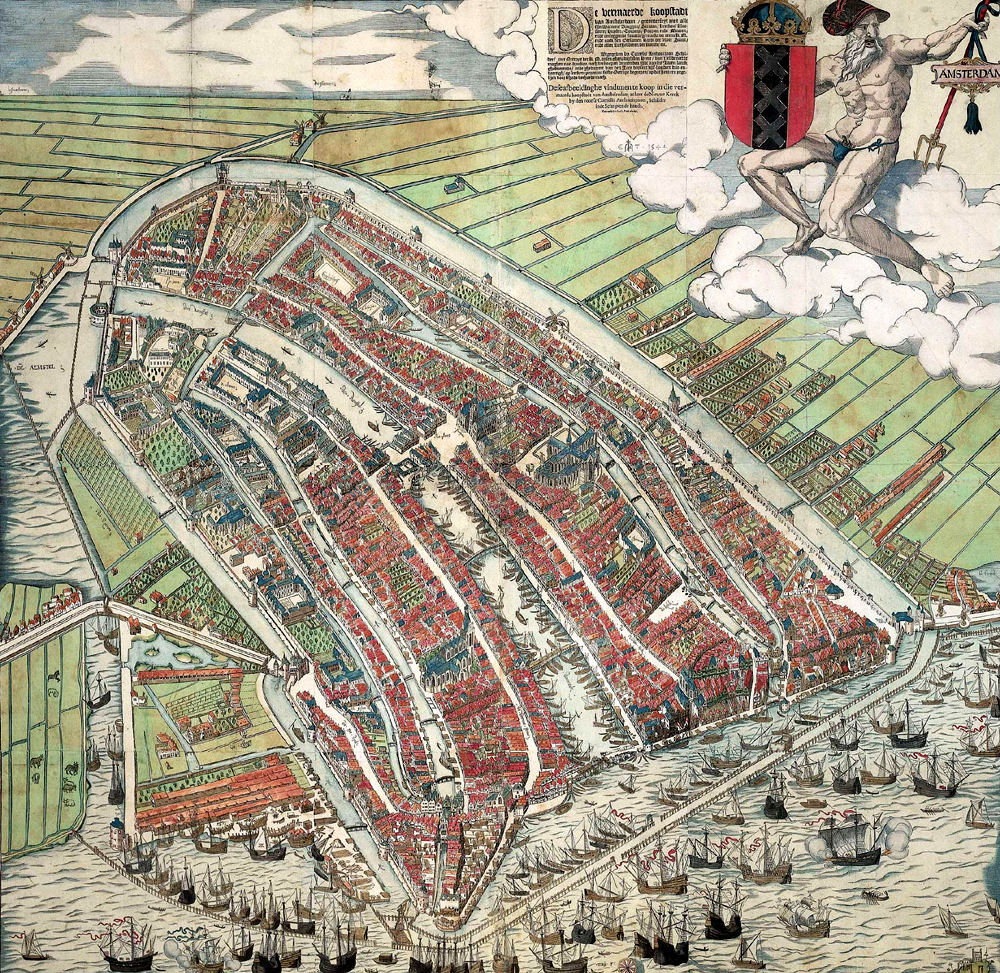
Volewijk in Noord was ideally located to maximize its effect: ships entering the port of Amsterdam passed by it, and the dangling corpses were clearly visible from the city.
Galgenstraat on Prinseneiland is named after this view; as soon as they stepped outside their doors, the residents of that street were confronted with the sight of decomposing corpses in the distance. It was an unsubtle but effective way of making it clear to the people what would happen if they did not obey the rules.
♦ Tourist attraction
However, it did not only serve as a deterrent. Just like the public executions on Dam Square, the gallows field was highly entertaining for the people of Amsterdam. It was a favorite place for a day out for the whole family, and there were even food and drink stalls so that no one went hungry.
Late medieval Amsterdammers were used to a smelly city with foul-smelling canals, so eating a sandwich among rotting corpses was no problem.
♦ Children's tree
The gallows field was not only a place of death, but also of new life. Curious Amsterdam children were kept quiet with the story that there was a tree near the gallows pit where babies came from. This children's tree only bloomed at night, and then it was important for the man and woman in love to row a boat to the gallows field to pick children.
In ‘Het nieuwe Princesse Liedt-Boeck’ (The New Princess Songbook) from 1682, it appears as follows:
De Amsterdamse Voolwijcks-Schuyt
Weet ghy niet wat dat die beduyt?
De Schuyt, of Kraeck-wage, is een
De Volewijck, en Put, gemeen,
Omtrent by die Knie-galgh staet
Daer Buer-vroutjens dan Roeyen gaet
Al aen den Put, tot sy gewis
Een Zoon of Dochter vinden, fris.
The story of the Kinderboom was passed down from generation to generation to children in Amsterdam for centuries, until the stork made its appearance.
De Kinderboom primary school in Noord is named after this old folk tale.
♦ Rembrandt
In the late summer of 2001, a piece of paper measuring 17 by 9 centimeters traveled from New York to London. The fragile sheet was treated with the utmost care and gentleness during its journey across the ocean.
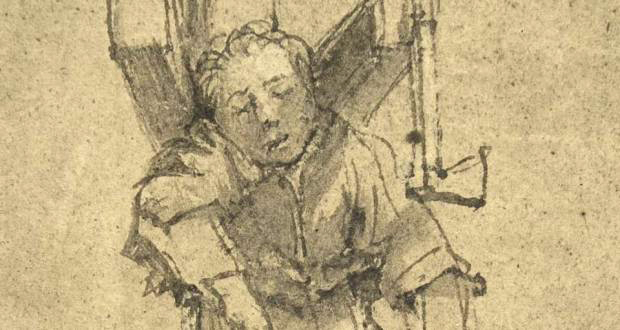
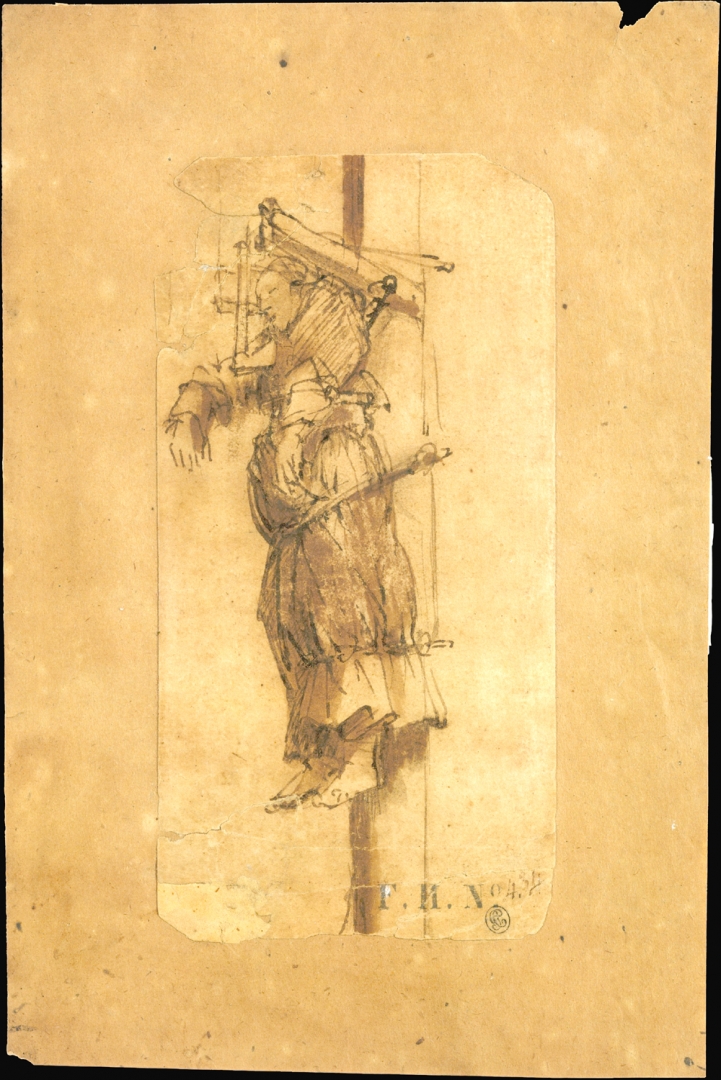
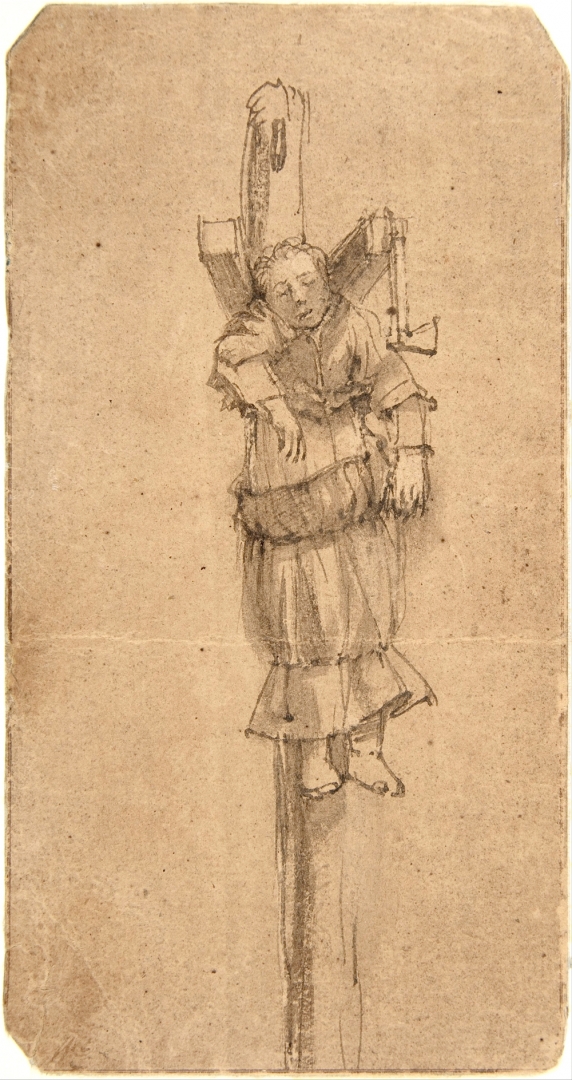
Three centuries earlier, in May 1664, the paper had been transported by boat across the IJ river to the Volewijck neighborhood in Amsterdam-Noord. There, the 57-year-old Rembrandt van Rijn had used it to make a drawing of Elsje Christiaens, who was almost forty years his junior. She was hanging there from a pole so that birds could feast on her body. Earlier that day, she had been executed on Dam Square, guilty of murdering her landlady, whose head she had smashed with an axe.
In the drawing—the axe also hangs on the gallows, next to the head of the condemned woman—Elsje Christiaens appears even younger than she was in reality. Rembrandt drew the dead woman with a flawless face and the expression of a sleeping child. The drawing has been in the possession of the Metropolitan Museum of Art, New York, since 1929, as has a second sketch of the dead Elsje.
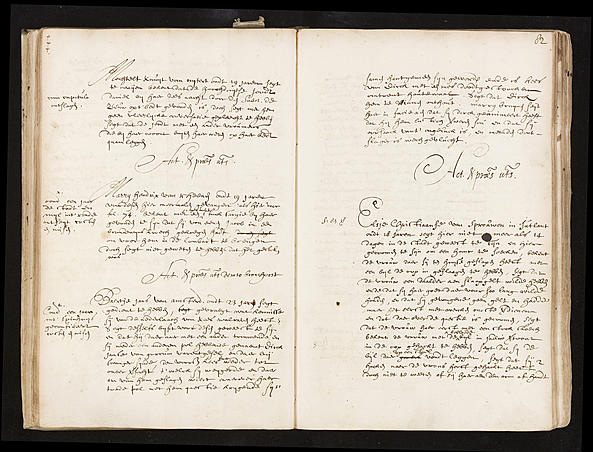
The story of the gruesome death of Elsje Christiaens owes its fame to the archival research conducted by Amsterdam archivist Miss I.H. van Eeghen in response to two drawings by Rembrandt. These depict a convicted woman with an axe above her head, tied to a stake at the Amsterdam gallows field Volewijk.
Based on the drawing technique, Rembrandt experts dated the drawings to around 1655. Van Eeghen was annoyed that they did not bother to search for the facts in the court archives.
She went through 25 years of confession books and discovered that the only woman sentenced to death who fit the description must have been the Danish maid Elsje Christiaens. Based on this finding, she was able to date the drawings precisely to early May 1664. Van Eeghen triumphantly concluded that Rembrandt experts had been wrong by eight to ten years. She therefore expressed the hope that ‘Elsje Christiaens, who once served as an example to deter others from committing crimes, will now serve as an example once again, this time for art historians to be cautious when dating works on the basis of stylistic criteria! (Van Eeghen, 78).
Nevertheless, some art historians continue to struggle with this. In Rembrandt’s Women (2004), Lloyd Williams argues that, based on style, the drawings should actually be dated earlier. Rembrandt only used such fine, somewhat scratchy parallel lines in the 1650s: ‘Intriguingly, it is only the link to Else Christiaens’s execution in 1664 which provides such a late date for both drawings’ (Williams, 239).

Rembrandt_Elsje Christiaens
References
Literature
- I.H. van Eeghen, ‘Elsje Christiaens en de kunsthistorici’, Maandblad Amstelodamum 56 (1969) 73-78.
- Geert Mak, Een kleine geschiedenis van Amsterdam (Amsterdam/Antwerpen 1994) 102-141.
- Julia Lloyd Williams e.a., Rembrandt’s women. Tentoonstellingscatalogus National Gallery of Scotland, Edinburgh en Royal Academy of Arts, Londen (München etc. 2004) 238-239.
- Margriet de Moor, De schilder en het meisje (Amsterdam 2010) [roman].
Illustratie
Tekening door Rembrandt, 1665 (Metropolitan Museum of Art, New York). Uit: Williams, Rembrandt’s women.
https://www.amsterdam.nl/bestuur-organisatie/volg-beleid/sprong-ij-snel/achtergrond/duistere-geheim-%27dam/
Auteur: Els Kloek
Art lijst
Schilderijen
- Bosch, Hieronymus – The Peddler
- Bosch, Hieronymus_The Haywain triptych
- Botticelli, Sandro_Primavera / Spring
- Brueghel the Elder, Pieter – The Tower of Babel
- Campin, Robert — Mérode Triptych
- Courbet, Gustave_The painters Studio
- Dali, Salvadore_The Temptation of Saint Anthony
- Dou, Gerard_the Quack Doctor
- Eyck van Barthélemy_Still life with books
- Fra Angelico_Annunciation
- Géricault, Théodore_Medusas raft
- Magritte, Rene_Prohibited to depict
- Matsys, Quinten_The money changer and his wife
- Memling, Hans_Two horses in a landscape
- Picasso, Pablo_Guernica
- Rembrandt_Abraham and the Three Angels
- Rembrandt_Elsje Christiaens
- Unknown – 16th century: Four depictions of a physician
- Velazquez, Diego_Las Meninas
Schilderijen en de dokter
- Agenesia Sacrale (a rare congenital disorder in which the fetal development of the lower spine)
- Alopecia areata (hair loss)
- Arthrogryposis congenita (birth defect, joints contracted)
- Artritis psoriatica (inflammatory disease of the joint)
- Artritis reumatoïde
- Breast development (delayed)
- Bubonic plague
- Diphtheria
- Eye surgery
- Flat foot and Pointed Foot
- Gigantism and Acromegaly
- Goiter (struma)
- Hare lip (cheiloschisis) / cleft palate
- Herpes zoster (shingles)
- Hunger edema
- Influenza Epidemic of 1858
- Insanity - Malle Babbe (1640)
- Leprosy
- Lovesick, pregnancy
- Lymph node tumor (lymphoma), non-Hodgkin
- Manic Depression Psychosis
- Measles / Rubella? (acute viral infection)
- Melanoma or nevus (birthmark)
- Membranous glomerulonephritis
- Murder (pneumothorax, arterial bleeding)
- Neurofibromatosis
- Osteoarthritis / hallux valgus
- Osteomyelitis
- Otitis media (acute middle ear infection)
- Parotitis (mumps)
- Polio
- Prepatellar bursitis
- Progeria
- Pseudohermafroditism
- Pseudopregnancy
- Psychoneurosis (acute)
- Rachitic chest
- Rheumatic fever (acute)
- Rhinophyma and rosacea_depression
- Rhinophyma or bulbous nose
- Rhinoscleroma
- Schimmelziekte_Favus
- Syfilis (harde 'sjanker')
- Tandcariërs
- The Extraction of the Stone of Madness
- Tuberculose long
- Ziekte van Paget
Schilders
Historie lijst
- 1632-1723_Antonie van Leeuwenhoek
- 1749-1823_Edward Jenner
- 1818-1865_Ignaz Semmelweis
- 1822-1895_Louis Pasteur
Wetenswaardigheden lijst
- 1887 Psychiatric Hospital
- Animals on duty
- Bizarre advice for parents
- Bloodletting
- Bloodthirsty Hungarian Countess Elizabeth Báthory (1560–1614)
- Butler escaped punishment three times.
- Dance mania / Saint Vitus Dance
- Doctors’ advice did more harm than good
- French Revolution Louis XVI
- Frontal syndrome (Phineas Gage)
- Heart disease (Egyptian princess)
- Ice Age (minor)_1300-1850
- Ivan IV de Verschrikkelijke (1530-1584)
- Kindermishandeling
- Koketteren met koningin Victoria
- Koningin door huidcrème vergiftigd
- Kraambedpsychose (Margery Kempe)
- Massacre in Beirut
- ME stonden bol van de seks
- Mummie bij de dokter
- Plee, Gemak of Kakstoel
- Prostaatkanker (mummie)
- Sexhandel in Londen
- Swaddling baby
- Syfilis was in de mode
- Testikels opofferen
- Tropische ziekten werden veroveraars fataal
- Vrouwen als beul in WOII
- Wie mooi wil zijn moet pijn lijden
- Zonnekoning woonde in een zwijnenstal