.jpg)
.jpg)
.jpg)
.jpg)
18th Dynasty, Egypt
(ca 1400 BC)
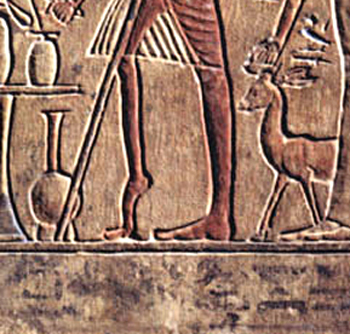
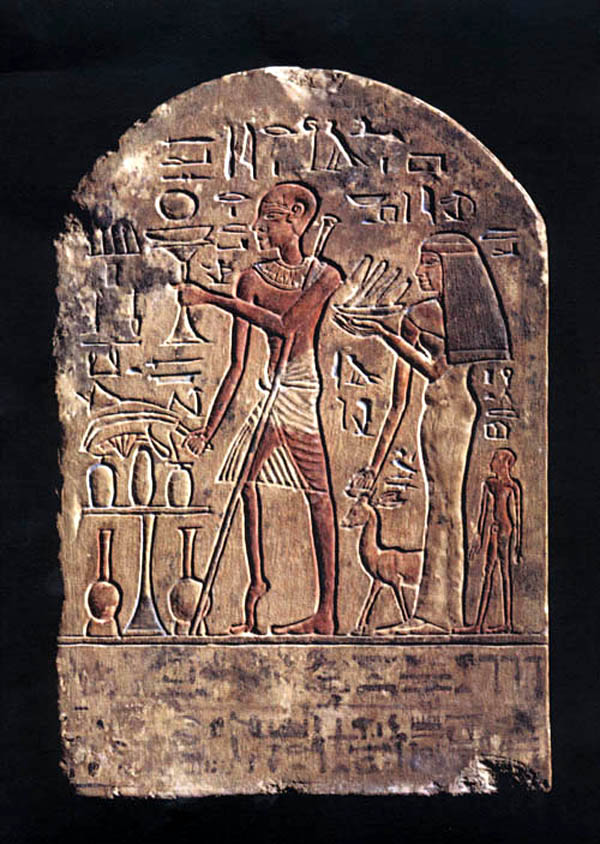
This Egyptian mural from around 1400 BC depicts the poor doorkeeper Ruma bringing an offering to the goddess Ishtar to heal him of his lameness.
♦ Painted stele of the doorkeeper Ruma ♦
♦ Diagnosis:
Main symptoms: wasted muscles, shortened right leg, contracted Achilles tendon
Secondary symptoms: young man, uses a long cane
Clinical diagnosis: acute anterior poliomyelitis
♦ Definition: acute anterior poliomyelitis
A viral inflammation of the anterior nodules of the gray matter of the spinal cord.
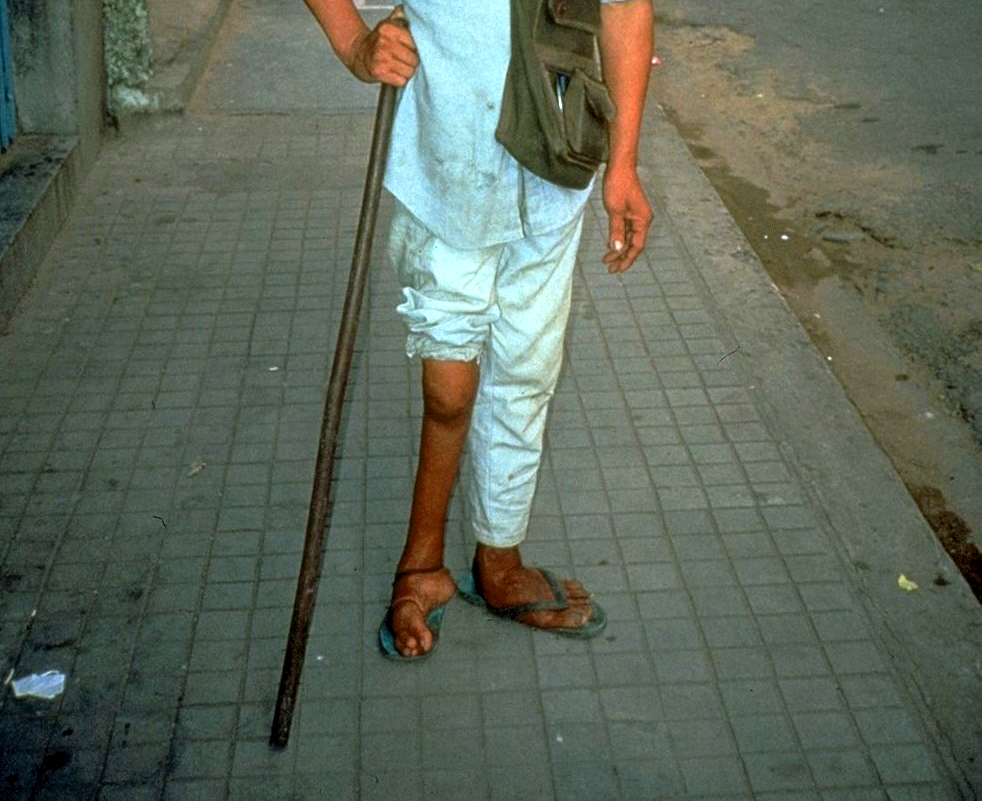
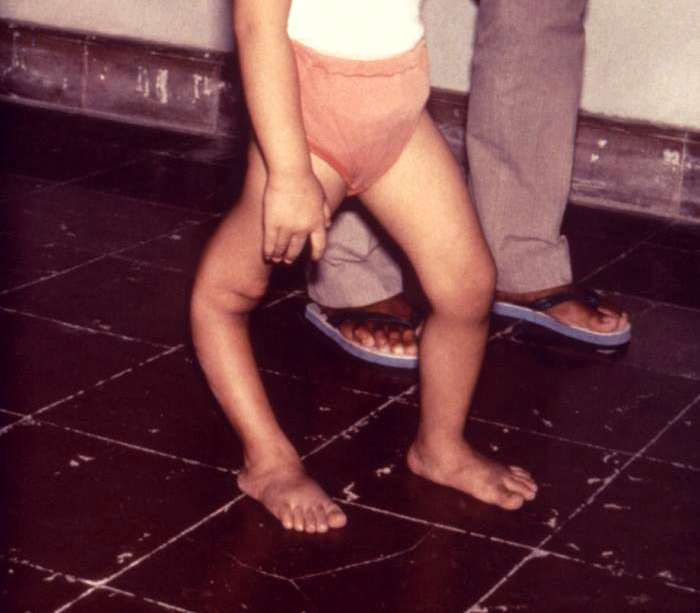
It occurs mainly in children, where it leads to paralysis of certain muscle groups or of an entire limb.
The disease strikes suddenly with fever, digestive problems, and pain in the affected muscles. Paralysis is usually most pronounced at the onset, often followed by a slight improvement. The affected muscles quickly waste away, their reflexes disappear, and a degenerative reaction develops. Muscle contractions can cause new deformities to develop later in life. The disease is endemic with epidemic outbreaks.
Some cases show no paralysis. In those cases, the diagnosis can only be made by examining the spinal fluid.
♦ Discussion:
Mandatory vaccination against poliomyelitis has virtually eradicated the disease since 1960 in the countries that participated in the program.
The World Health Organization (WHO) hopes to soon be able to prevent all new cases of polio.
Source: Jan Dequeker
♦ Poliomyelitis,
Also known as infantile paralysis or polio for short, is a viral disease.
(Greek: polio = gray, myelitis = inflammation of the spinal cord).
It is an inflammation of the gray matter in the spinal cord.
This disease is caused by the poliovirus, which is an enterovirus belonging to the picornaviridae (pico-RNA-viridae: small RNA viruses).
The virus is excreted in the feces of infected individuals.
Poor hygiene can cause the virus to be transmitted from one person to another. The incubation period is usually 6-20 days, but it can also be longer or shorter.
Nowadays, polio usually progresses without serious symptoms; approximately 95% of ‘patients’ notice little or nothing of the disease. However, these people do spread the polio virus. Approximately 5% experience vague general symptoms such as a sore throat or stomach ache.
Less than 1% of infected individuals experience muscle paralysis. This is mainly caused by poliovirus type 1.
There is no official treatment for polio.
Paintings
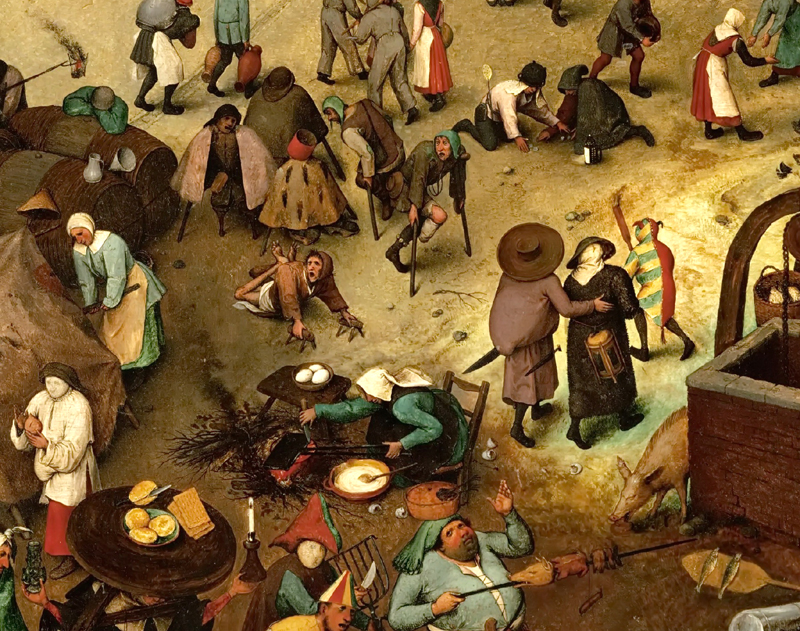
Fight Between Carnival and Lent, Pieter Bruegel in 1559
two crippled figures appear; although this artistic testimony is not formal proof of poliomyelitis, it strongly suggests that both suffered from the disease.
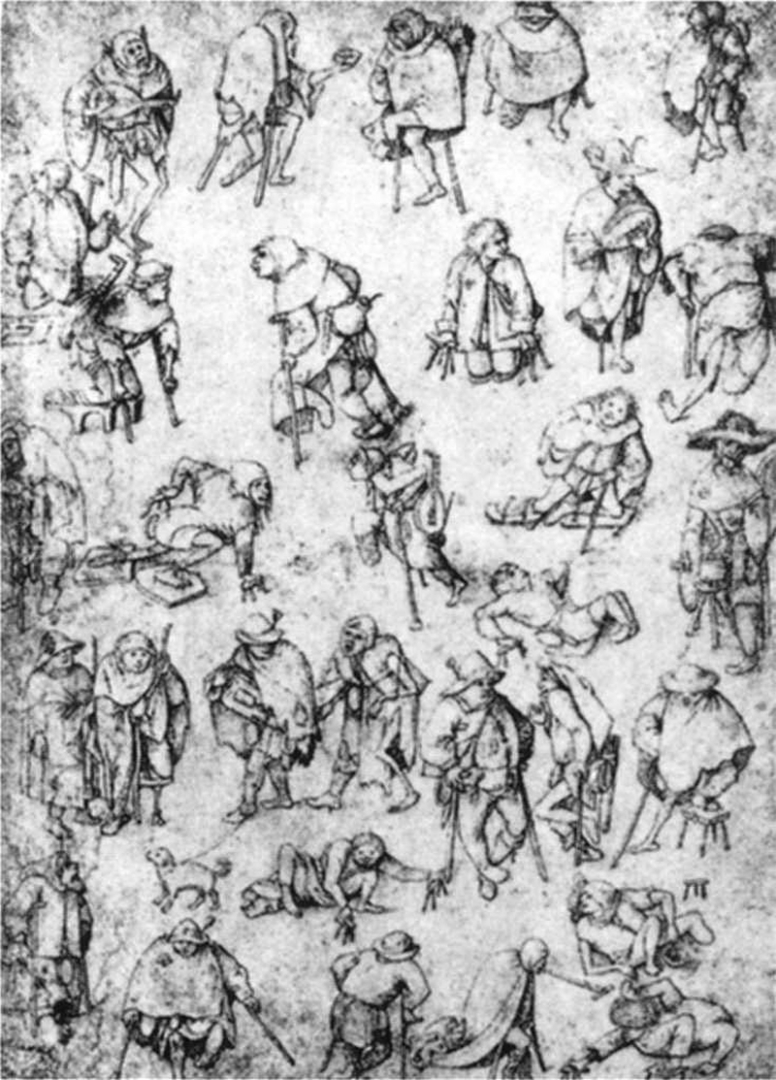
Studies of Beggars and Vagrants, Hieronymus Bosch or Pieter Bruegel the Elder
also captures the cruel effects of the disease.
Sad Legacy, Joaquín Sorolla 1899
represented a group of children probably with sequels of poliomyelitis bathing at Valencia’s beach.
Christina’s World, Andrew Wyeth’s, 20th-century American art
where the woman who suffered from polio is saw making her slow crawl across the yard.

Polio
References
Jan Dequeker
The artist and the doctor look at paintings
The Description of the Sequels os Poliomyelitis in Art
Medicine and Art
Bumbulut Calin
Photos
wikimedia.org
wikipedia.commons
Art lijst
Schilderijen
- Bosch, Hieronymus – The Peddler
- Bosch, Hieronymus_The Haywain triptych
- Botticelli, Sandro_Primavera / Spring
- Brueghel the Elder, Pieter – The Tower of Babel
- Campin, Robert — Mérode Triptych
- Courbet, Gustave_The painters Studio
- Dali, Salvadore_The Temptation of Saint Anthony
- Dou, Gerard_the Quack Doctor
- Eyck van Barthélemy_Still life with books
- Fra Angelico_Annunciation
- Géricault, Théodore_Medusas raft
- Magritte, Rene_Prohibited to depict
- Matsys, Quinten_The money changer and his wife
- Memling, Hans_Two horses in a landscape
- Picasso, Pablo_Guernica
- Rembrandt_Abraham and the Three Angels
- Rembrandt_Elsje Christiaens
- Unknown – 16th century: Four depictions of a physician
- Velazquez, Diego_Las Meninas
Schilderijen en de dokter
- Agenesia Sacrale (a rare congenital disorder in which the fetal development of the lower spine)
- Alopecia areata (hair loss)
- Arthrogryposis congenita (birth defect, joints contracted)
- Artritis psoriatica (inflammatory disease of the joint)
- Artritis reumatoïde
- Breast development (delayed)
- Bubonic plague
- Dental caries
- Diphtheria
- Extraction of the Stone of Madness
- Eye surgery
- Flat foot and Pointed Foot
- Fungal disease_Favus
- Gigantism and Acromegaly
- Goiter (struma)
- Hare lip (cheiloschisis) / cleft palate
- Herpes zoster (shingles)
- Hunger edema
- Influenza Epidemic of 1858
- Insanity - Malle Babbe (1640)
- Leprosy
- Lovesick, pregnancy
- Lymph node tumor (lymphoma), non-Hodgkin
- Manic Depression Psychosis
- Measles / Rubella? (acute viral infection)
- Melanoma or nevus (birthmark)
- Membranous glomerulonephritis
- Murder (pneumothorax, arterial bleeding)
- Neurofibromatosis
- Osteoarthritis / hallux valgus
- Osteomyelitis
- Otitis media (acute middle ear infection)
- Paget's disease
- Parotitis (mumps)
- Polio
- Prepatellar bursitis
- Progeria
- Pseudohermafroditism
- Pseudopregnancy
- Psychoneurosis (acute)
- Pulmonary tuberculosis
- Rachitic chest
- Rheumatic fever (acute)
- Rhinophyma and rosacea_depression
- Rhinophyma or bulbous nose
- Rhinoscleroma
- Syphilis (hard chancre)
Schilders
Historie lijst
- 1632-1723_Antonie van Leeuwenhoek
- 1749-1823_Edward Jenner
- 1818-1865_Ignaz Semmelweis
- 1822-1895_Louis Pasteur
Wetenswaardigheden lijst
- 1887 Psychiatric Hospital
- Animals on duty
- Bizarre advice for parents
- Bloodletting
- Bloodthirsty Hungarian Countess Elizabeth Báthory (1560–1614)
- Butler escaped punishment three times.
- Dance mania / Saint Vitus Dance
- Doctors’ advice did more harm than good
- French Revolution Louis XVI
- Frontal syndrome (Phineas Gage)
- Heart disease (Egyptian princess)
- Ice Age (minor)_1300-1850
- Ivan IV de Verschrikkelijke (1530-1584)
- Kindermishandeling
- Koketteren met koningin Victoria
- Koningin door huidcrème vergiftigd
- Kraambedpsychose (Margery Kempe)
- Massacre in Beirut
- ME stonden bol van de seks
- Mummie bij de dokter
- Plee, Gemak of Kakstoel
- Prostaatkanker (mummie)
- Sexhandel in Londen
- Swaddling baby
- Syfilis was in de mode
- Testikels opofferen
- Tropische ziekten werden veroveraars fataal
- Vrouwen als beul in WOII
- Wie mooi wil zijn moet pijn lijden
- Zonnekoning woonde in een zwijnenstal