Hieronymus Bosch
1450, Den Bosch - 1516, Den Bosch, Netherlands
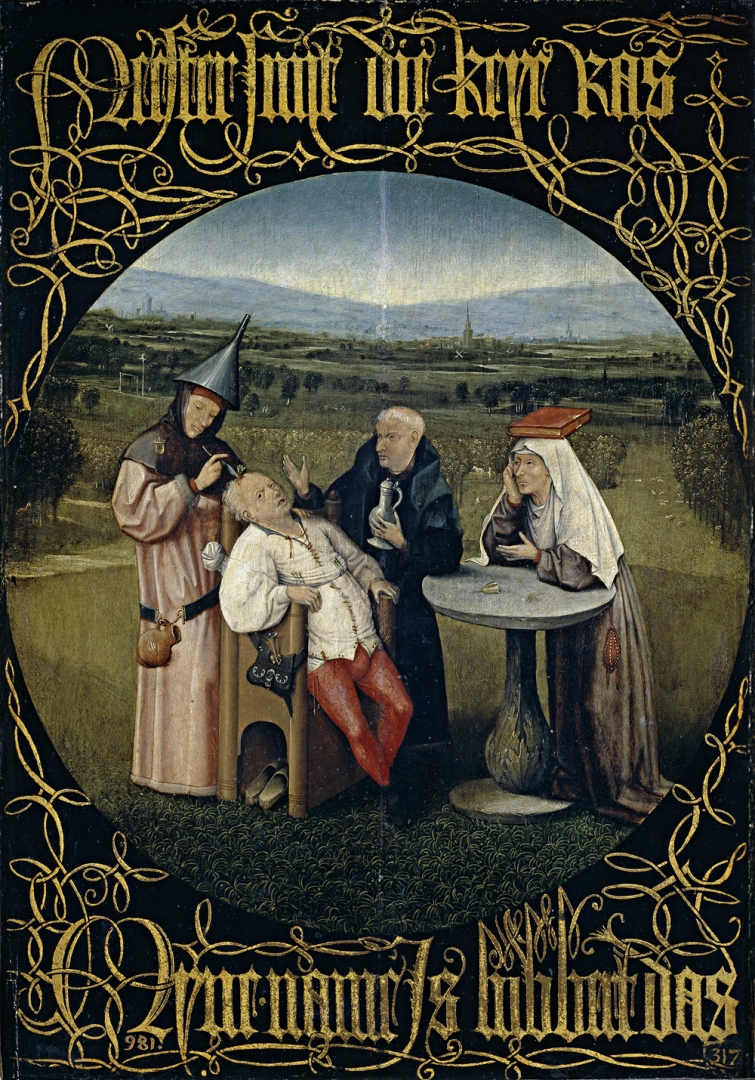
The Extraction of the Stone of Madness
♦ The Extraction (1481)
The inscription on the edge of this tondo reads as follows: ‘Meester snyt die Keye ras / myne name Is lubbert das’.Lubbert is Dutch for ‘simpleton, fool’ and literally meant ‘deprived of reproductive capacity’, ‘castrated’ or ‘unfaithful’. Because this inscription quotes a Dutch saying - ‘jemand van die keye snyden’, which means to cure someone of their madness - the hypothesis has been put forward that all paintings of stone carvings could be representations of the proverb rather than depictions of reality.
♦ Diagnosis
Main symptoms: Skull surgery, removal of a foreign object.
Side effects: Peculiar surgeon and assistant, well-fed adult male.
Clinical diagnosis: Surgical removal of “the stone of madness.”
♦ Discussion
An old Dutch saying described someone who behaved strangely as having ‘a rock in his head’. Taking advantage of the gullibility of simple folk, quacks offered to remove these rocks. They always found patients among those suffering from headaches.
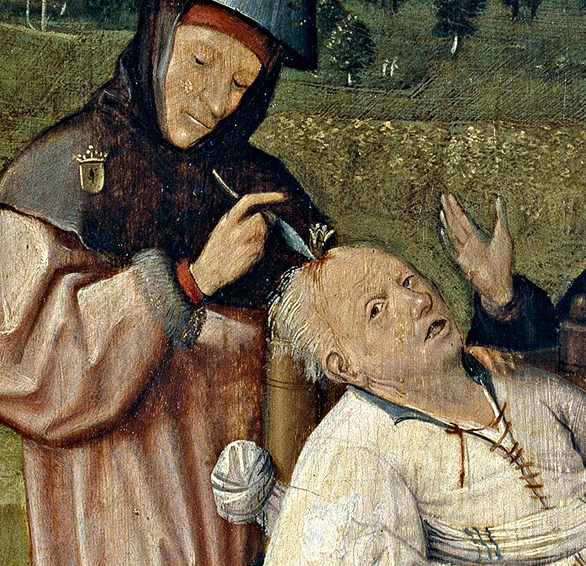
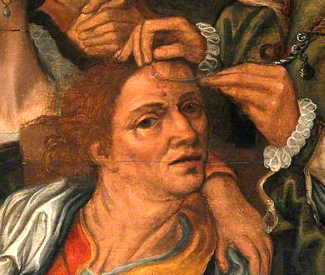
The ‘surgeon’ would then tie his patient securely to a bench, make a small incision in his head, and then conjure up one or more blood-stained stones while the victim moaned and screamed. These ‘surgeons’ were a popular target for satire in the 17th century.
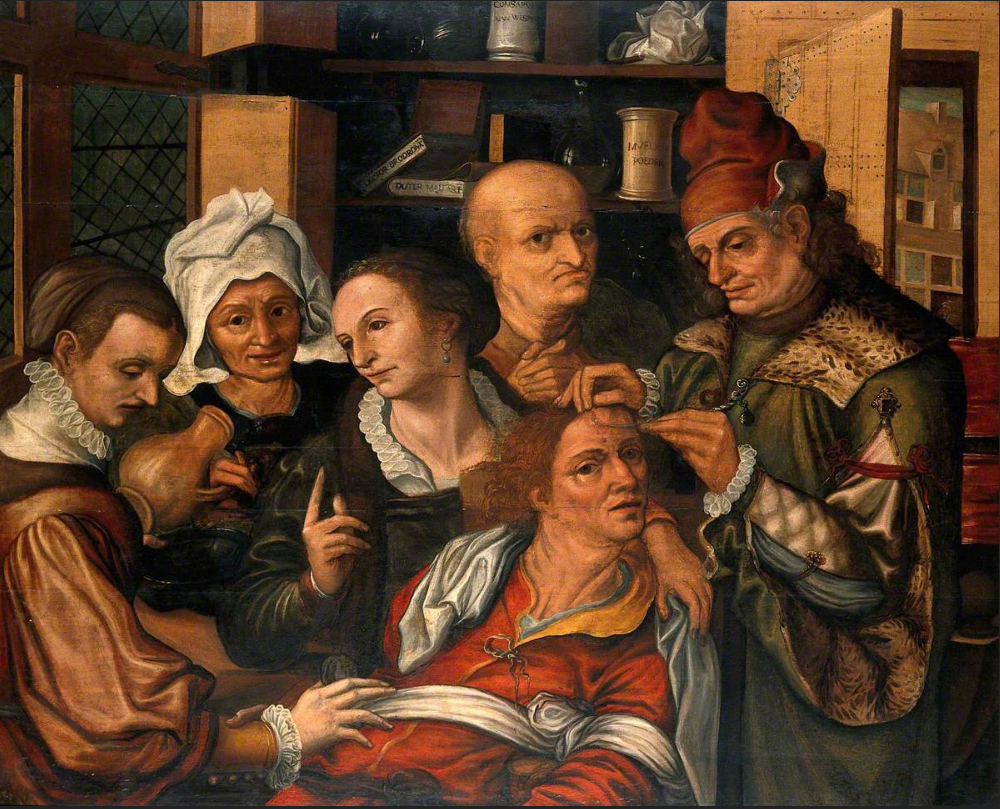
We see a fairly common scene of a quack doctor in the market square. The stone cutters were undoubtedly the most bizarre of the traveling charlatans. They claimed to be able to cure madness and mental illnesses such as epilepsy or melancholy by removing stones from the victim's head. To do this, they made a small incision in the skull, after which they used their nimble fingers to make it look as if they had removed a stone from the opening, which they then threw into a basket with great fanfare. It is remarkable that in the late 17th century, the mentally ill were still described as people with a ‘stone in their head’.
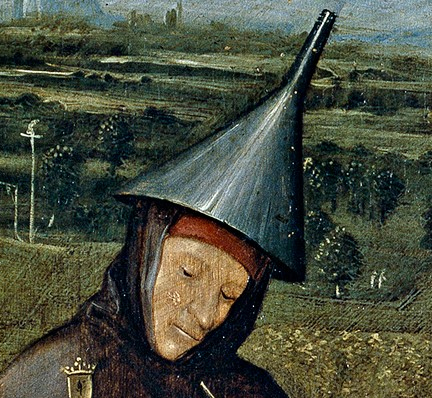
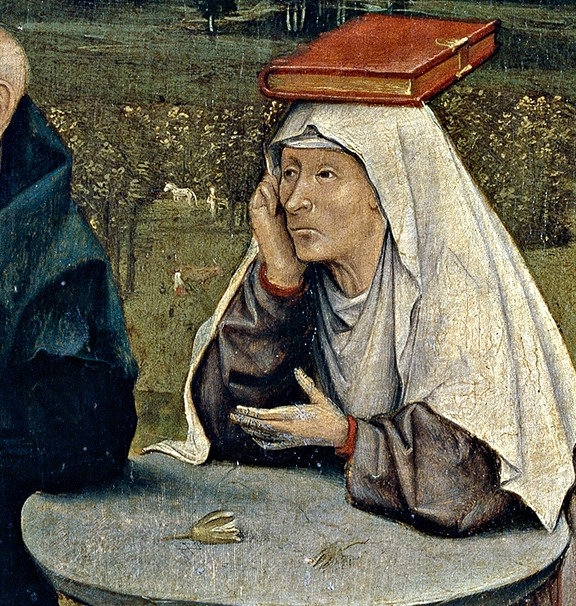
The composition of this painting gives the strange impression of being a combination of emptiness and fullness. The funnel on the quack's head was supposed to distill alchemical wisdom, but in that position it would have wasted its contents needlessly. The red book misused by the woman as headgear represents unread, useless science.
Lubbert himself is fat and wealthy, but absent-minded and possibly impotent. Anyone who watches closely will see that he is being ‘deflated’ rather than relieved of his stones. The limp objects that come out of his head, some of which are already lying on the table, are mud snails. These can symbolize many things and were used both as slang for money and for sexual innuendo.
The fact that the participants in this ritual look rather strange suggests that Bosch is mocking them. Nevertheless, the tradition of stone cutting seems to have continued well into the Renaissance period.
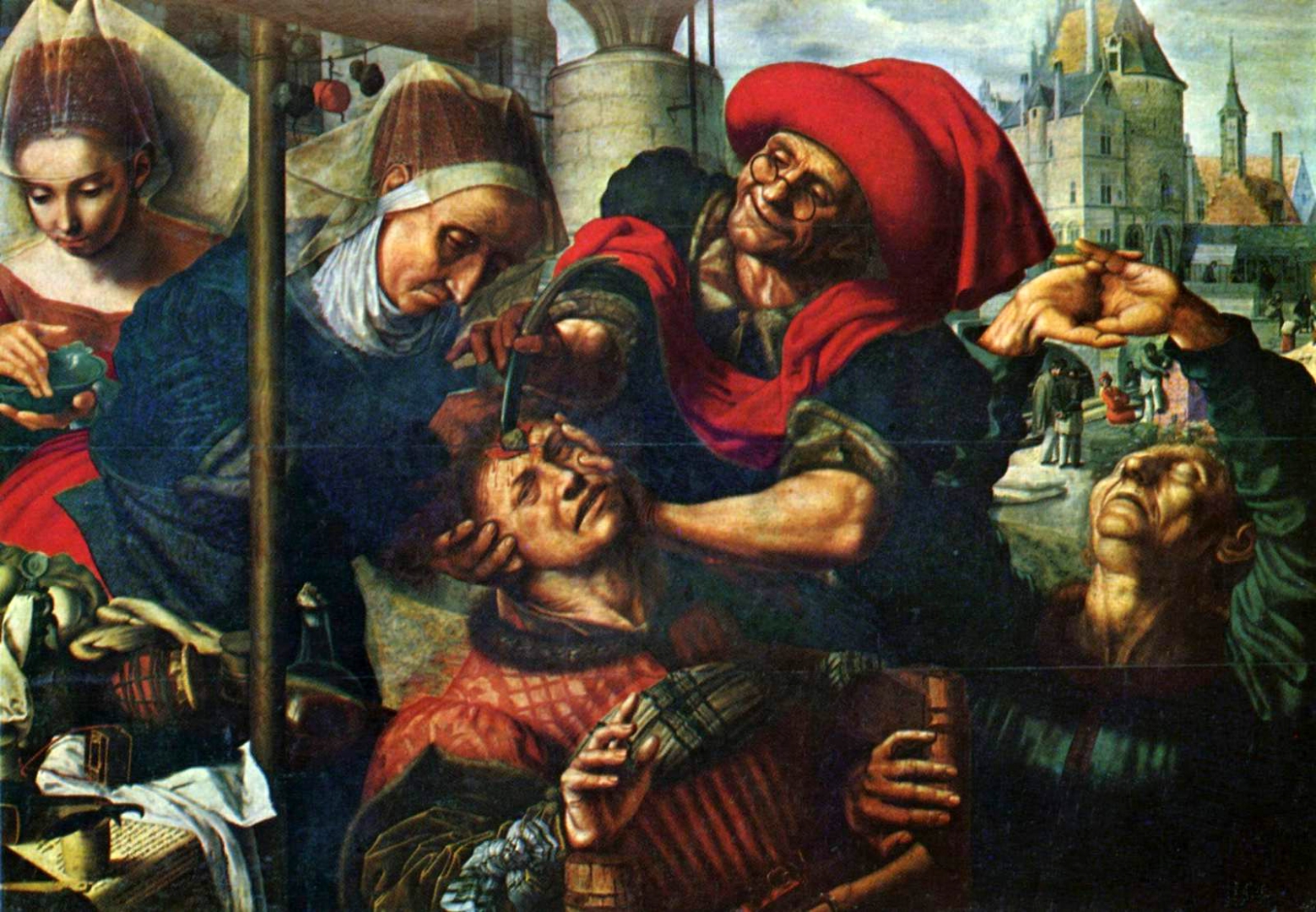
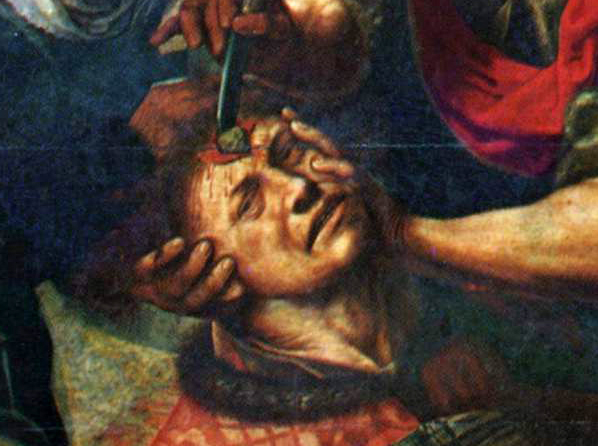
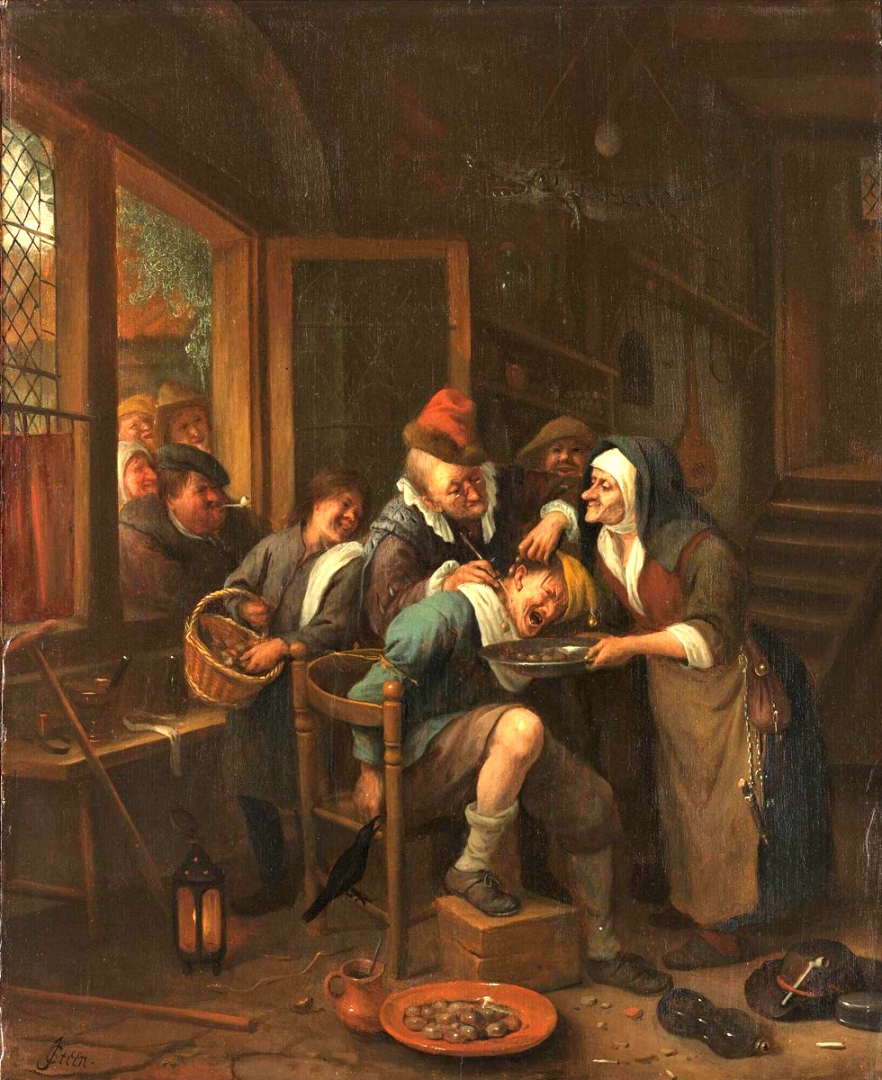
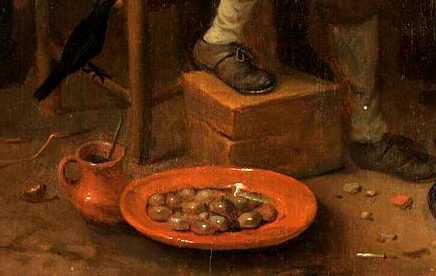
The same operation is depicted by Jan van Hemessen (The Surgeon,1555) and by Jan Steen (Cutting for the Stone).
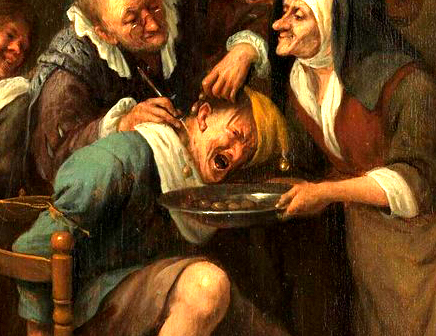
In the latter painting by Jan Steen, it is clear to see that the removal of the stone is a hoax. A boy with a basket full of stones passes them to the surgeon's assistant, who in turn collects the ‘stones removed from the brain’ in a bowl.
Source: Jan Dequeker

Extraction of the Stone of Madness
References
Jan Dequeker
The artist and the doctor look at paintings
Photos
Wikipedia.org
Wikimedia.org