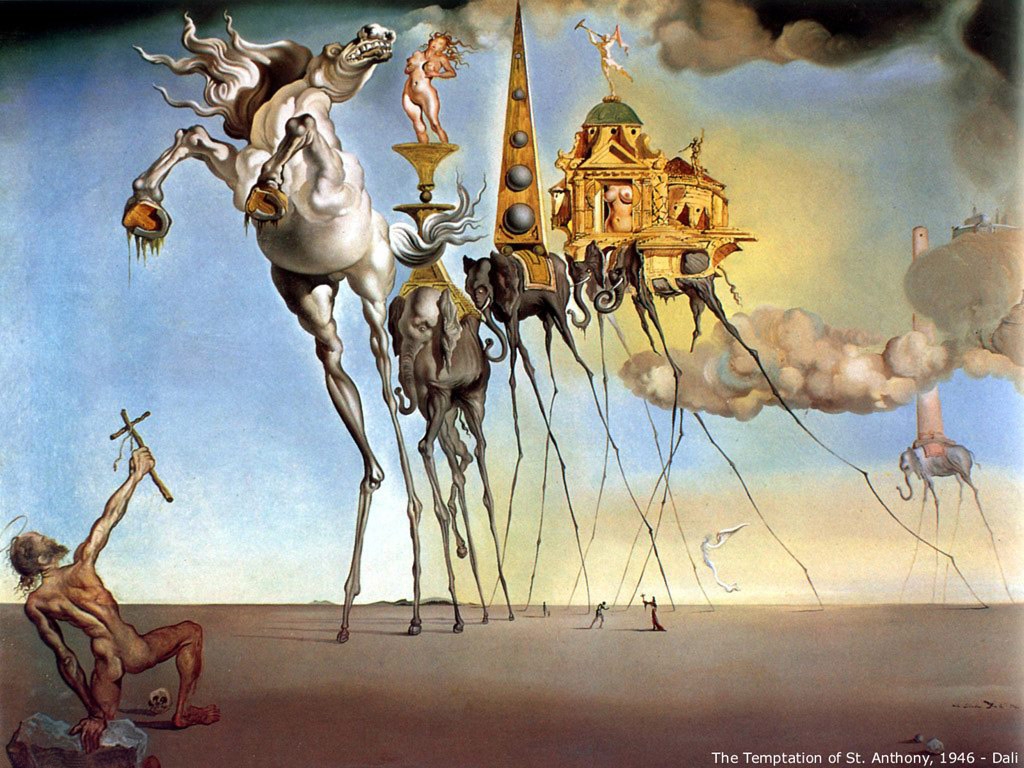
The Temptation of Saint Anthony is a surrealist painting by Salvador Dalí, created in 1946. It is one of Dalí's most famous works.
This famous work by Dalí was painted for a competition organized by film producers Albert Lewin and David Loew. The painting was to play an important role in their film Bel Ami, based on a novella by Guy de Maupassant.
Although Dalí did not win the competition with this work, it nevertheless attracted a great deal of attention.
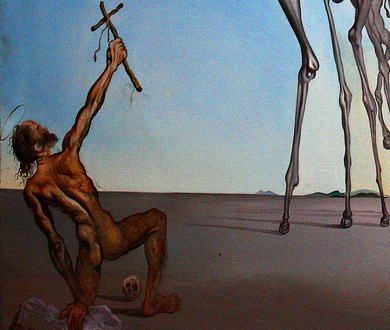
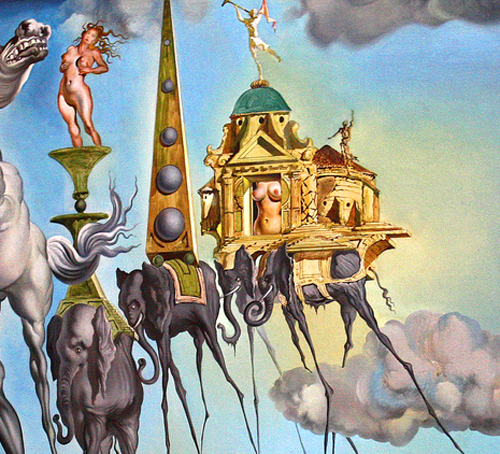
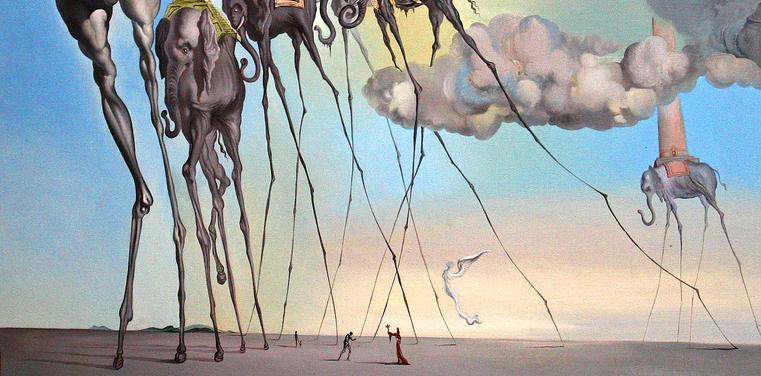
The theme of the temptation of Saint Anthony was intended to illustrate the struggle between good and evil in the work of Guy de Maupassant. This theme is depicted here by Saint Anthony who, by holding up a cross, tries to resist his temptations.
The TemtationsDe verleidingen
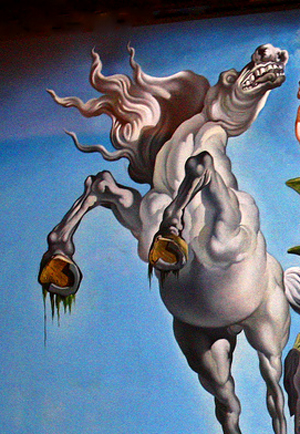
- horse
symbol of strength and lust
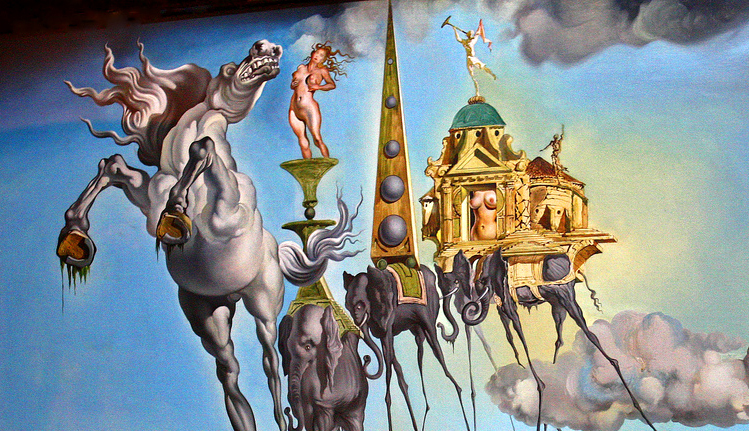
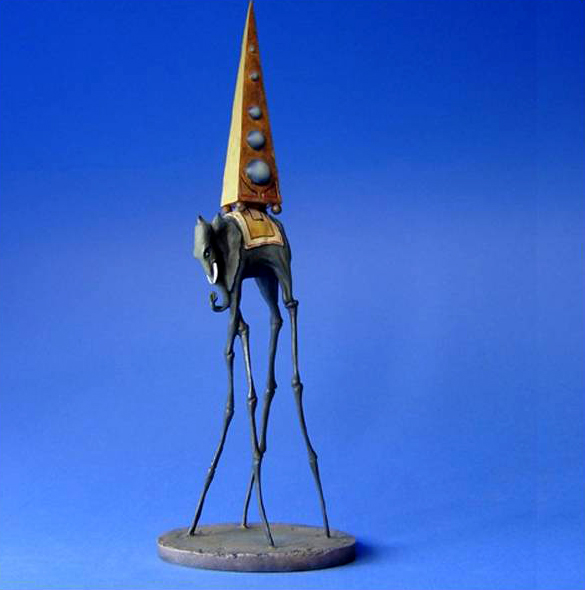
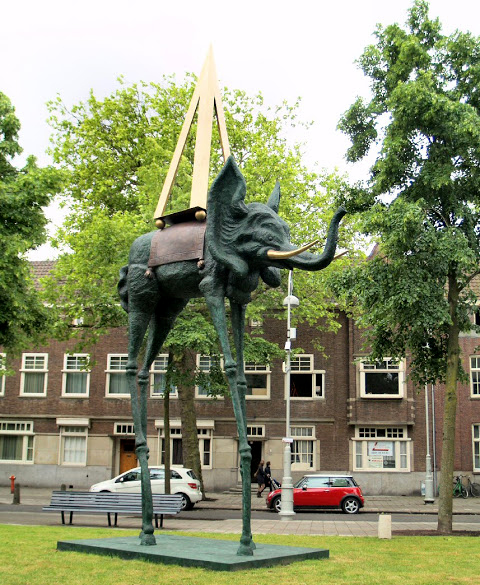
- elephant
with the chalice of fornication on its back (phallic shape)
- naked woman
in the chalice: erotic character emphazised
- animals with long legs
weightlessness (sexual arousal)
- elephant in the background
with the phalic shape on its back
Is Saint Anthony strong enough to dispel his vision through his imploring gesture and the rock of faith on which he stands, or will he be overwhelmed by this caravan of sensuality that threatens him? Half hidden in the clouds in the background is the Escorial, the embodiment of the secular and spiritual order.
Here, the artist succeeds in leaving the viewer in uncertainty: is Saint Anthony strong enough to dispel his vision through his imploring gesture and the rock of faith on which he stands, or will he be overwhelmed by this caravan of sensuality that threatens him?
Dalí is generally identified with surrealism. This work also seems to lean towards surrealism in terms of style and imagery.
However, since the 1930s, the artist had become estranged from surrealism and its specific creative processes. He evolved towards an academic, theatrical style, which he often applied in religious and mystical scenes. However, both the special color scheme and the reminiscences of the frottage technique found in the figure of Saint Anthony make this work lean more towards his earlier surrealist period than towards the style of his other works from the same period.

Dali, Salvadore_The Temptation of Saint Anthony
References
Photos
wikipedia